
Listening to the First Heartbeat of Spring: Imbolc on the Land
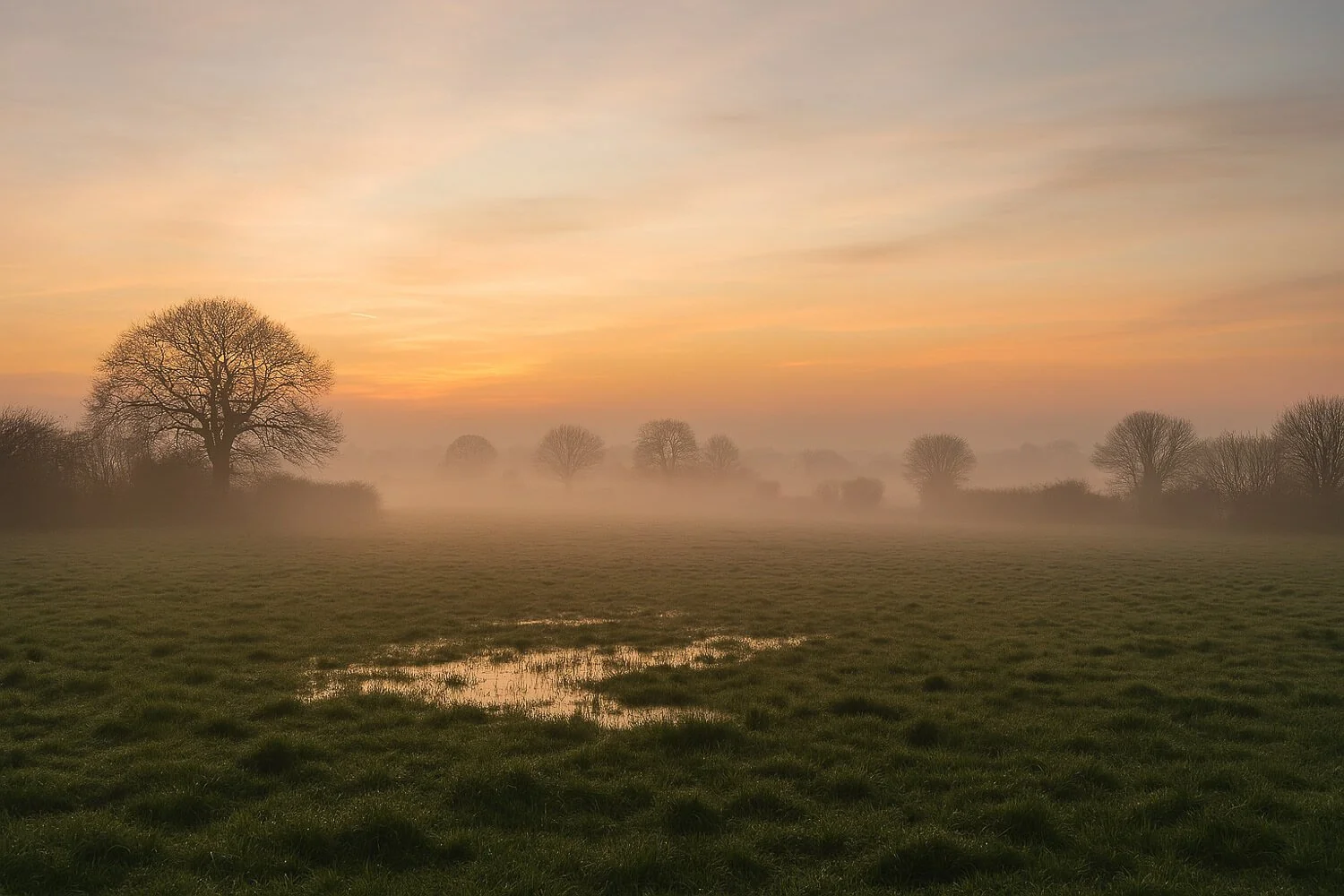
There’s a tenderness to Imbolc that arrives long before the weather admits it. A hush. A tremor. A quiet brightening at the edges of the day. Even after a week when Somerset’s fields have worn more water than earth, there’s still that unmistakable sense that something is turning beneath the surface.
You feel it the moment you step out onto the land - that subtle, shimmering promise that winter is loosening its grip, even if the Levels are still holding the sky’s reflection like a great, silver mirror.
The Romance of a Landscape in Transition
Surveying at this time of year is like reading a love letter written in the land’s own hand. Every contour softened by rain, every hedgerow heavy with memory, every flooded meadow holding its breath.
The South West wears its seasons honestly. Somerset glimmers with standing water. Wiltshire’s chalk downs exhale mist. Dorset’s lanes run like small, determined rivers. Devon’s hills cradle pockets of early birdsong.
And in the middle of all this, a surveyor stands with tripod legs sunk into the earth, listening.
Because surveying isn’t just measurement - it’s attention. It’s intimacy with place. It’s the quiet romance of knowing a landscape not just by sight, but by feel.
Imbolc: The First Whisper of the Year
Imbolc is the festival of first stirrings - the moment the land begins to dream of spring. It’s the scent of thawing soil. The shy tilt of a snowdrop. The way the wind softens, just enough to make you lift your head.
Even in a flooded field, you can sense it: the pulse beneath the mud, the quiet insistence of life preparing to return.
Surveyors are often the first to witness this. Before builders, before planners, before anyone else sets foot on a site, we’re there - boots sinking, breath clouding, watching the countryside shift from sleep to waking.
There’s something deeply romantic about being the first to greet the year on the land’s behalf.
Brigid’s Light in a Waterlogged World
Imbolc belongs to Brigid - guardian of hearth, craft, and the first spark of inspiration. She’s the keeper of thresholds, the patron of beginnings, the one who coaxes flame from damp kindling.
If ever there were a goddess who understood Somerset in February, it’s her.
Surveying in this season feels like working under her blessing: seeking clarity in murky places, finding structure in softened ground, listening for the land’s truth beneath the water’s temporary claim.
There’s a tenderness to it - a sense of partnership with the earth rather than conquest.
Liminal Places, Liminal Work
Surveyors spend their days in the in‑between spaces: the line where one field becomes another, the edge of a woodland, the quiet boundary between what was and what will be.
Imbolc is a liminal festival - winter behind, spring ahead. A hinge in the year, a breath held between seasons.
And when you’re out there, standing in a Somerset meadow that has become a shallow lake, watching the first light ripple across its surface, it’s impossible not to feel the magic of that threshold.
The land is changing. The year is turning. And you are there to witness it.
A Season for Quiet Magic
Imbolc reminds us that beginnings don’t always arrive with fanfare. Sometimes they arrive as:
a snowdrop nodding beside a stone wall
a skylark testing its voice over a Dorset ridge
the smell of damp earth warming under a shy sun
Surveying, at its heart, is about listening to the land - and Imbolc is the land’s first whisper of the year.
So here’s to the season of subtle magic. To muddy boots and lengthening days. To Brigid’s spark and the South West’s slow unfurling. To the quiet joy of being the first one out there, boots muddy, kit humming gently beside you, watching the countryside wake up.
And if a mischievous breeze nudges your tripod or a robin insists on supervising your work - well, that’s just Imbolc reminding you that the land is alive, and you’re part of its story.